What Credit Score Do I Need to Buy a House? Your Guide
what credit score do i need to buy a house

What Credit Score Do I Need to Buy a House? Your Guide

Unlock the secrets to mortgage eligibility and prepare your finances for a successful home purchase.

Start Your Home Journey

Key Takeaways

  • ✓ FHA loans can be obtained with credit scores as low as 500-580, depending on down payment.
  • ✓ Conventional loans typically require a minimum credit score of 620.
  • ✓ VA loans have no official minimum credit score, but lenders often look for 620+.
  • ✓ Improving your credit score can significantly lower your interest rates and monthly payments.

How It Works

1
Check Your Current Credit Score

Access your credit reports from all three major bureaus (Experian, Equifax, TransUnion). Review them for accuracy and identify areas for improvement.

2
Understand Loan Type Requirements

Research different mortgage options like FHA, VA, USDA, and Conventional loans. Each has specific credit score thresholds and down payment requirements.

3
Improve Your Credit Score

Pay bills on time, reduce credit utilization, and dispute inaccuracies. These actions can quickly boost your score, making you a more attractive borrower.

4
Get Pre-Approved for a Mortgage

Once your credit is in good standing, get pre-approved by a lender. This clarifies your budget and shows sellers you're a serious buyer.

Understanding Minimum Credit Scores for Home Loans

A modern flat lay of a smartphone, credit card, and calculator on a blue background. Photo: Nataliya Vaitkevich / Pexels
The journey to homeownership often begins with a crucial question: what credit score do I need to buy a house? The answer isn't a single, definitive number, but rather a range that varies significantly based on the type of mortgage loan you pursue. While some lenders might advertise a minimum, the reality is more nuanced, influenced by factors like your down payment, debt-to-income ratio, and overall financial health. Understanding these thresholds is the first step in preparing yourself for the mortgage application process. For conventional loans, which are not insured or guaranteed by a government agency, most lenders typically look for a minimum FICO credit score of 620. However, achieving this score doesn't guarantee the best interest rates. Borrowers with scores in the higher 700s or 800s often qualify for more favorable terms, translating to lower monthly payments and significant savings over the life of the loan. This is because a higher credit score signals lower risk to lenders, indicating a strong history of responsible financial management. Government-backed loans offer more flexibility for individuals with lower credit scores. FHA (Federal Housing Administration) loans are a popular option, allowing borrowers to qualify with scores as low as 580 with a 3.5% down payment. In some cases, if you can make a larger down payment (typically 10% or more), an FHA loan might even be possible with a credit score as low as 500. This flexibility makes FHA loans an excellent entry point for first-time homebuyers or those who have faced credit challenges in the past. It’s important to note that while the FHA sets these guidelines, individual lenders can impose their own, stricter requirements, known as 'overlays.' VA (Department of Veterans Affairs) loans, available to eligible service members, veterans, and surviving spouses, are unique in that the VA itself does not set a minimum credit score requirement. Instead, it's up to individual lenders to establish their own criteria. Most lenders offering VA loans will look for a credit score of at least 620, similar to conventional loans. However, the significant benefit of VA loans is that they often require no down payment and do not have private mortgage insurance (PMI), making them incredibly attractive. USDA (United States Department of Agriculture) loans, designed for low-to-moderate-income individuals in eligible rural areas, also do not have a strict minimum credit score set by the USDA. Lenders typically seek scores of 640 or higher, but exceptions can be made for strong applications with compensating factors. The key takeaway is to research each loan type thoroughly and understand that your credit score is just one piece of the puzzle, albeit a very important one. It's advisable to check your credit score well in advance of applying for a mortgage to give yourself time to improve it if necessary.

The Impact of Your Credit Score on Mortgage Rates and Terms
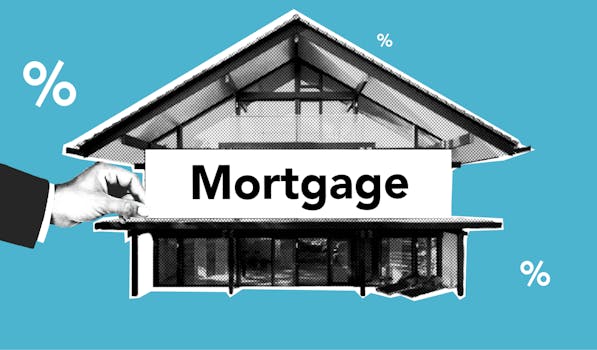
Cutout paper composition of realtor with inscription mortgage over house for purchases with payment of interest on amount of cost Photo: Monstera Production / Pexels
Your credit score is more than just a number; it's a powerful indicator of your financial reliability, and it profoundly impacts the terms and cost of your mortgage. A higher credit score signals to lenders that you are a low-risk borrower, someone who is likely to make their payments on time. This perception of lower risk translates directly into more favorable loan terms, primarily in the form of lower interest rates. Even a seemingly small difference in your interest rate can result in tens of thousands of dollars in savings over the 15-year or 30-year life of a mortgage. Consider two hypothetical borrowers, both seeking a $300,000 mortgage. Borrower A has an excellent credit score of 760 and qualifies for an interest rate of 6.5%. Borrower B, with a good but not excellent score of 680, might only qualify for an interest rate of 7.0%. While a 0.5% difference might appear minor, over a 30-year mortgage, Borrower A could save over $30,000 in interest payments compared to Borrower B. This illustrates the substantial financial leverage that a strong credit score provides. Lower interest rates mean lower monthly payments, which in turn frees up more of your income for other expenses or savings, improving your overall financial well-being. Beyond interest rates, your credit score can also influence other aspects of your mortgage. Lenders may be more willing to offer flexible repayment terms, waive certain fees, or require a smaller down payment for borrowers with exceptional credit. Conversely, a lower credit score might lead to a higher down payment requirement, stricter loan covenants, or even a denial of your mortgage application. Some lenders might also require you to pay for private mortgage insurance (PMI) if your down payment is less than 20% of the home's purchase price, and while PMI is often necessary for lower down payments, your credit score can influence the cost of that insurance as well. Furthermore, your credit score plays a role in the speed and ease of the loan approval process. Lenders often have automated underwriting systems that can quickly approve applications from borrowers with strong credit profiles. If your score is on the lower end, your application might require more manual review, potentially extending the approval timeline and requiring more documentation. It's not just about qualifying; it's about qualifying on the best possible terms. Therefore, understanding and actively managing your credit score is an indispensable part of preparing for homeownership. It's an investment in your financial future that pays dividends for decades.

Strategies to Improve Your Credit Score for Homebuying

Hands using laptop with card reader for secure online payment. Technology-driven financial transaction. Photo: REINER SCT / Pexels
If your current credit score isn't quite where you need it to be to buy a house, don't despair. There are concrete steps you can take to improve it, often within a few months, significantly enhancing your chances of securing a favorable mortgage. The key is understanding the factors that influence your FICO score and strategically addressing them. The five main components are payment history (35%), amounts owed (30%), length of credit history (15%), new credit (10%), and credit mix (10%). Focusing on the areas with the largest impact will yield the best results. First and foremost, your payment history is the most critical factor. Make sure to pay all your bills on time, every time. This includes credit cards, student loans, car payments, and any other recurring financial obligations. Even a single late payment can ding your score, so setting up automatic payments or reminders is a smart strategy. If you have any past-due accounts, bring them current as quickly as possible. Consistently demonstrating responsible payment behavior over time will steadily build a positive payment history. It's a foundational element that lenders scrutinize carefully when determining your eligibility for a home loan. Next, focus on reducing your 'amounts owed,' particularly your credit utilization ratio. This ratio compares the amount of credit you're using to the total amount of credit available to you. Experts recommend keeping your credit utilization below 30% across all your credit accounts. For example, if you have a credit card with a $10,000 limit, try to keep your balance below $3,000. Paying down credit card balances is one of the quickest ways to see a positive impact on your score. If possible, aim even lower, ideally below 10%, for the best possible results. This shows lenders that you can manage credit responsibly without maxing out your available lines of credit. For more detailed insights, you can explore resources on how to manage debt for homeownership. Another crucial step is to obtain copies of your credit reports from all three major bureaus (Experian, Equifax, and TransUnion) and review them meticulously for errors. Mistakes, such as incorrect late payments, accounts that aren't yours, or inaccurate balances, can unfairly depress your score. If you find any discrepancies, dispute them immediately with the credit bureau and the creditor. Removing negative inaccuracies can provide a significant and immediate boost to your credit score. Avoid opening too many new credit accounts in a short period before applying for a mortgage, as this can temporarily lower your score due to hard inquiries and a shorter average credit age. Finally, avoid closing old credit accounts, even if they have a zero balance, as this can reduce your overall available credit and shorten your credit history, both of which can negatively impact your score.

Common Pitfalls and Smart Tips Before Applying for a Mortgage
Detailed loan agreement document close-up on a wooden table representing legal and financial concepts. Photo: RDNE Stock project / Pexels
Navigating the mortgage application process can be complex, and a few missteps can derail your homebuying dreams, even if you have a decent credit score. Being aware of common pitfalls and employing smart strategies can make a significant difference in securing your dream home. **Common Pitfalls to Avoid:** * **Making Major Purchases:** Resist the urge to buy a new car, furniture, or other big-ticket items on credit before or during the mortgage application process. This can increase your debt-to-income ratio and impact your credit score, making you appear riskier to lenders. * **Changing Jobs:** A sudden job change, especially one with a significant pay cut or a switch to a less stable employment type, can signal instability to lenders and impact your loan approval. * **Closing Old Credit Accounts:** While it might seem counterintuitive, closing old credit cards can actually hurt your score by reducing your total available credit and shortening your credit history. * **Accumulating New Debt:** Avoid taking on any new loans or increasing credit card balances. Lenders will re-evaluate your credit before closing, and new debt can jeopardize your approval. * **Applying for Too Much New Credit:** Each credit application results in a 'hard inquiry' on your credit report, which can slightly lower your score. Limit new applications to only what's necessary. **Smart Tips for a Smooth Application:** * **Get Pre-Approved, Not Just Pre-Qualified:** Pre-qualification is an estimate, while pre-approval involves a detailed review of your finances by a lender, giving you a concrete understanding of how much you can borrow. This also makes you a more attractive buyer to sellers. * **Save for a Larger Down Payment:** While not always required, a larger down payment reduces the amount you need to borrow, potentially lowers your interest rate, and might help you avoid private mortgage insurance (PMI). * **Build a Cash Reserve:** Lenders like to see that you have reserves – several months' worth of mortgage payments – in savings after your down payment and closing costs. This demonstrates financial stability. * **Lower Your Debt-to-Income (DTI) Ratio:** This ratio compares your total monthly debt payments to your gross monthly income. Lenders typically prefer a DTI of 36% or less, though some allow up to 43-50% for certain loans. Pay down existing debt to improve this ratio. * **Gather All Necessary Documents Early:** Be prepared with tax returns, pay stubs, bank statements, and other financial records. Having these ready will expedite the application process. * **Communicate with Your Lender:** Be open and honest with your loan officer about your financial situation. They can guide you through the best options and help you address any potential issues proactively.

Comparison

Loan TypeMinimum FICO Score (Typical)Minimum Down Payment (Typical)Mortgage Insurance
Conventional6203% - 20%PMI required if <20% down
FHA580 (3.5% down), 500 (10% down)3.5% - 10%MIP (Mortgage Insurance Premium) for life of loan
VANo official minimum (lenders typically 620+)0%VA Funding Fee (can be waived)
USDANo official minimum (lenders typically 640+)0%Guarantee Fee and Annual Fee

What Readers Say

"Before reading this, I was so confused about what credit score I needed to buy a house. This article broke down the FHA loan options clearly, helping me realize my 590 score was actually enough with a decent down payment. Truly a game-changer for my home search!"

Sarah J. · Austin, TX

"I thought my credit was too low for a mortgage. This guide explained the different loan types and the impact of my score on interest rates so well. It motivated me to boost my score from 600 to 650, which saved me a lot on my conventional loan."

Michael D. · Orlando, FL

"The tips on avoiding common pitfalls were invaluable. I almost bought a new car before my mortgage closed, but this article warned me against it. Thanks to this advice, my loan went through without a hitch, and I got my dream home!"

Jessica L. · Denver, CO

"While very comprehensive, I would have liked a bit more detail on specific local lender overlays for FHA loans. However, the core information on what credit score do I need to buy a house and how to improve it was excellent and very actionable."

David R. · Seattle, WA

"As a first-time homebuyer, the 'How It Works' section was perfect. It laid out the steps clearly, from checking my score to getting pre-approved. It demystified the whole process of understanding what credit score do I need to buy a house for me."

Emily C. · Chicago, IL

Frequently Asked Questions

What is the absolute minimum credit score to buy a house?

While there isn't one universal minimum, some FHA loans can be obtained with a FICO score as low as 500 if you have a 10% down payment. For a 3.5% down payment, an FHA loan typically requires a 580 score. Conventional loans generally start at 620, and VA/USDA loans often align with conventional lender requirements around 620-640, despite having no official minimum from the government agencies themselves.

Can I buy a house with a credit score below 600?

Yes, it is possible to buy a house with a credit score below 600, primarily through FHA loans. If your score is between 500-579, you may qualify for an FHA loan with a 10% down payment. However, finding a lender willing to approve loans at the lower end of this spectrum can be challenging, as many impose their own stricter 'overlays' beyond the FHA's minimums.

How quickly can I improve my credit score for a mortgage?

The speed of credit score improvement depends on your starting point and the actions you take. Paying down high credit card balances (reducing utilization) can show significant improvement in as little as 1-2 billing cycles. Correcting errors on your credit report can also have a rapid effect. Consistent on-time payments, however, build history and impact over a longer period, typically 3-6 months or more for substantial gains.

Does a higher down payment compensate for a lower credit score?

A higher down payment can sometimes help compensate for a lower credit score, particularly with FHA loans. A larger down payment reduces the lender's risk, making them more willing to approve applicants with slightly less-than-ideal credit. For FHA loans, a 10% down payment can allow for a credit score as low as 500, whereas a 3.5% down payment requires a 580. However, it doesn't entirely negate the impact of a very low score.

What's the difference between a good credit score and an excellent one for homebuying?

A 'good' credit score (typically 670-739) will generally qualify you for most mortgage types. An 'excellent' score (740-850) will unlock the most competitive interest rates and favorable loan terms, leading to significantly lower monthly payments and substantial savings over the life of the loan. Lenders view excellent scores as very low risk, offering their best deals to these borrowers.

Who should consider an FHA loan?

FHA loans are ideal for first-time homebuyers, individuals with lower credit scores (500-579 with 10% down, 580+ with 3.5% down), or those with limited savings for a large down payment. They are also suitable for buyers with a higher debt-to-income ratio than conventional loans might allow, offering more flexible underwriting standards.

Is it risky to apply for multiple mortgages to compare rates?

Applying for multiple mortgages within a short window (typically 14-45 days, depending on the scoring model) is generally considered a single credit inquiry by FICO models, so it won't significantly hurt your score. It's actually a smart strategy to compare offers from several lenders to ensure you get the best rates and terms. Just avoid spreading these applications out over too long a period.

How will future economic changes affect credit score requirements for mortgages?

Economic changes can certainly impact mortgage credit score requirements. During periods of economic uncertainty or recession, lenders may tighten their lending standards, potentially requiring higher credit scores or larger down payments to mitigate risk. Conversely, in strong economic times, standards might relax slightly. Staying informed about economic trends and maintaining a strong credit profile is always the best preparation.

Understanding what credit score you need to buy a house is the first step toward achieving your homeownership dreams. By taking proactive steps to check and improve your credit, you can unlock better mortgage rates and secure your financial future. Don't let uncertainty hold you back – start your credit journey today and take control of your path to homeownership.

Topics: what credit score do i need to buy a houseminimum credit score for mortgageimprove credit score for home loanmortgage credit requirementsbuying a house with bad credit
Leo List

DK Escorts LU Escorts AT Escorts SE Escorts FI Escorts CH Escorts DE Escorts HR Escorts IE Escorts GR Escorts CZ Escorts NO Escorts BE Escorts FR Escorts SI Escorts IL Escorts NL Escorts PL Escorts HU Escorts ES Escorts IT Escorts PT Escorts SK Escorts RO Escorts ZA Escorts UY Escorts US Escorts UK Escorts NZ Escorts AU Escorts
Brampton weed
Adultwork EstrelaBet Vai de Bet R7 Bet Betão Galera Bet Rainbet Bet9ja Shop SportyBet BetKing Sisal Loto Foot Hollywoodbets YesPlay Odibets RushBet Jugabet BetWarrior BetCity MSport betPawa Fortebet