✓ Down payments can range from 0% to 20% or more, depending on the loan type and lender.
✓ A 20% down payment helps avoid Private Mortgage Insurance (PMI) on conventional loans.
✓ FHA loans allow down payments as low as 3.5%, but require mortgage insurance premiums (MIP).
✓ VA and USDA loans offer 0% down payment options for eligible borrowers.
✓ Saving for a down payment is often the biggest hurdle for first-time home buyers.
How It Works
1
Assess Your Financial Standing
Evaluate your current savings, income, and debt-to-income ratio. This provides a realistic picture of what you can comfortably afford for a down payment and monthly mortgage.
2
Explore Loan Options
Research different mortgage types like FHA, VA, USDA, and Conventional loans. Each has unique down payment requirements and benefits that might align with your eligibility and financial goals.
3
Calculate Potential Down Payments
Determine the percentage of the home's price you can afford to put down. Use online calculators to see how different down payment amounts affect your monthly payments and overall loan cost.
4
Seek Pre-Approval
Get pre-approved by a lender to understand your borrowing capacity and confirm your down payment requirements. This step also strengthens your offer when you find the right home.
Understanding Down Payment Basics for Home Buyers
Photo: David Crypto / Pexels
For many prospective homeowners, the question of "how much down payment for a house" is often the first, and sometimes most daunting, hurdle. A down payment is essentially the initial cash contribution you make towards the purchase price of a home, and it directly reduces the amount you need to borrow from a lender. This upfront investment is a critical component of any home purchase, signaling your financial commitment and reducing the lender's risk. While the traditional wisdom often suggests a 20% down payment, the reality in today's diverse mortgage landscape is far more flexible. Many loan programs are designed to assist buyers who may not have that substantial sum saved, offering pathways to homeownership with much lower upfront costs.
The size of your down payment has several significant implications for your mortgage. Firstly, a larger down payment generally means a smaller loan amount, which translates to lower monthly mortgage payments and less interest paid over the life of the loan. Secondly, it can influence the interest rate you receive; lenders often offer more favorable rates to borrowers with higher equity in their homes from the outset. Thirdly, and crucially for conventional loans, putting down 20% or more allows you to avoid Private Mortgage Insurance (PMI). PMI is an additional monthly fee charged by lenders to protect themselves in case you default on your loan, typically required when your equity is less than 20%. While not a deal-breaker, avoiding PMI can save you a considerable amount of money each month.
Conversely, making a smaller down payment, while making homeownership more accessible, usually comes with certain trade-offs. It typically means a larger loan amount, higher monthly payments, and often the necessity of paying mortgage insurance (either PMI for conventional loans or Mortgage Insurance Premiums (MIP) for FHA loans). However, for many first-time home buyers or those in competitive markets, these trade-offs are often acceptable to achieve the dream of homeownership sooner. The key is to understand the various loan options available and how each one impacts your down payment requirements and overall financial obligations. There isn't a one-size-fits-all answer, and exploring different scenarios is essential to making an informed decision that aligns with your financial capacity and long-term goals. It's about finding the balance between affordability now and financial well-being in the future, ensuring your down payment strategy supports a sustainable homeownership journey.
Exploring Different Down Payment Options: From 0% to 20%+
Photo: Atlantic Ambience / Pexels
The notion that you absolutely need a 20% down payment to buy a house is a common misconception. While it's certainly advantageous, a wide spectrum of loan programs caters to different financial situations, offering down payment options ranging from 0% to well over 20%. Understanding these options is crucial for determining how much down payment for a house is right for you. Let's delve into the most common types:
**0% Down Payment Loans:** These are often considered the holy grail for buyers with limited savings, and they are indeed available through specific government-backed programs. The two primary options are VA loans and USDA loans. VA loans are exclusively for eligible service members, veterans, and surviving spouses. They offer 100% financing, meaning no down payment is required, and they do not charge monthly mortgage insurance. However, they do have a one-time VA funding fee. USDA loans are designed for low-to-moderate income borrowers purchasing homes in eligible rural areas. Like VA loans, they offer 100% financing but come with an upfront and annual guarantee fee, which functions similarly to mortgage insurance. Both programs have specific eligibility criteria that borrowers must meet.
**Low Down Payment Options (3% - 5%):** For those who don't qualify for 0% down programs but still have limited savings, several excellent options exist. FHA loans, backed by the Federal Housing Administration, are popular choices, especially for first-time buyers. They typically require a minimum down payment of just 3.5% of the purchase price. FHA loans have more flexible credit requirements compared to conventional loans, making them accessible to a broader range of borrowers. However, FHA loans mandate both an upfront Mortgage Insurance Premium (MIP) and an annual MIP, which remains for the life of the loan in most cases. Conventional loans, which are not government-backed, also offer low down payment options, some as low as 3% or 5% (e.g., Fannie Mae's HomeReady and Freddie Mac's Home Possible programs). These programs are often aimed at low-to-moderate income borrowers or those purchasing in underserved communities. While they require PMI with less than 20% down, this insurance can often be canceled once you reach 20% equity in your home.
**The Traditional 20% Down Payment:** As mentioned, putting down 20% on a conventional loan is the benchmark for avoiding PMI. This significantly reduces your monthly housing costs and overall interest paid. It also signals strong financial health to lenders, potentially leading to better interest rates. While it requires a larger upfront sum, the long-term savings can be substantial. For those who can afford it, it's often the most financially sound choice.
**More Than 20% Down Payment:** Some buyers choose to put down even more than 20%, especially in competitive markets or if they are purchasing a second home or investment property. A larger down payment further reduces your loan amount, leading to even lower monthly payments and less interest. It can also be a strategic move to stand out in a multiple-offer situation, as it demonstrates strong financial backing and reduces perceived risk for the seller. Each of these options comes with its own set of advantages and disadvantages, making it essential to evaluate your personal financial situation and goals before deciding.
The Financial Impact of Your Down Payment: PMI, Interest, and Equity
Photo: Monstera Production / Pexels
The amount you put down on a home has a ripple effect across your entire financial landscape as a homeowner. Beyond simply reducing your initial loan amount, your down payment profoundly influences your monthly expenses, the total cost of your mortgage, and your financial flexibility. Understanding these interconnected impacts is crucial when determining how much down payment for a house is feasible and strategic for your situation.
One of the most immediate and significant impacts is on Private Mortgage Insurance (PMI). As discussed, if you make a down payment of less than 20% on a conventional loan, your lender will almost certainly require you to pay PMI. This insurance protects the lender, not you, in case you default on your loan. PMI typically adds an extra line item to your monthly mortgage payment, which can range from 0.3% to 1.5% of your original loan amount annually. While it might seem like a small percentage, it adds up over time and increases your overall housing cost without building any equity for you. The good news is that PMI on conventional loans can usually be canceled once your loan-to-value (LTV) ratio reaches 80% (meaning you have 20% equity in your home), either through scheduled payments or appreciation of your home's value. In contrast, FHA loans require Mortgage Insurance Premiums (MIP), which include both an upfront premium and an annual premium. The annual MIP on FHA loans generally lasts for the life of the loan if your initial down payment was less than 10%, making conventional loans with PMI potentially more attractive in the long run if you plan to build equity quickly.
Beyond mortgage insurance, your down payment directly affects the total interest you pay over the life of the loan. A larger down payment means you're borrowing less money, and therefore, you'll accrue less interest. Even a seemingly small difference in the down payment percentage can result in tens of thousands of dollars in interest savings over a 30-year mortgage. For example, on a $300,000 home with a 5% interest rate, putting down 20% ($60,000) instead of 5% ($15,000) could save you over $40,000 in interest alone over the loan term, not to mention the lower monthly payments. This long-term perspective is vital when calculating your mortgage affordability.
Furthermore, a larger down payment immediately gives you more equity in your home. Equity is the portion of your home's value that you own outright. Higher initial equity provides a greater financial cushion against market fluctuations and can offer more flexibility down the line, such as access to home equity loans or lines of credit if needed. It also reduces your risk of being underwater on your mortgage (owing more than your home is worth) if property values decline. While a smaller down payment makes homeownership more accessible, it's crucial to weigh these financial implications against your budget and long-term financial goals. Sometimes, waiting a little longer to save for a larger down payment can lead to significant savings and greater financial security in the future.
Strategies for Saving Your Down Payment and Avoiding Common Mistakes
Photo: Atlantic Ambience / Pexels
Saving for a down payment is often the most challenging part of the homebuying process, but with a strategic approach, it's an achievable goal for many. Understanding effective saving strategies and common pitfalls can significantly accelerate your journey to homeownership. When considering how much down payment for a house you need, also consider how you will accumulate those funds.
Here are some proven strategies for building your down payment fund:
* **Create a Dedicated Savings Account:** Open a separate, high-yield savings account specifically for your down payment. This makes it easier to track your progress and prevents you from accidentally dipping into the funds for other expenses.
* **Automate Your Savings:** Set up automatic transfers from your checking account to your down payment savings account each payday. Even small, consistent contributions add up quickly.
* **Trim Unnecessary Expenses:** Review your budget meticulously and identify areas where you can cut back. This might include dining out less, canceling unused subscriptions, or reducing discretionary spending on entertainment and shopping. Every dollar saved is a dollar closer to your home.
* **Boost Your Income:** Consider taking on a side hustle, freelancing, or working overtime to supplement your primary income. Even a temporary increase in income can significantly accelerate your savings.
* **Sell Unused Items:** Declutter your home and sell items you no longer need or use. Websites and apps make it easy to sell clothing, electronics, furniture, and more, providing a quick cash injection for your down payment.
* **Explore Down Payment Assistance Programs:** Many states, counties, and cities offer programs that provide grants or low-interest loans to help eligible buyers with their down payment and closing costs. These are particularly beneficial for first-time home buyers and can bridge the gap to make homeownership a reality.
* **Tax Refunds and Bonuses:** Instead of spending unexpected windfalls like tax refunds, work bonuses, or inheritances, direct them straight into your down payment fund.
**Common Mistakes to Avoid:**
* **Draining Your Emergency Fund:** While a down payment is important, never deplete your entire emergency fund. You need a financial safety net for unexpected expenses after you move in.
* **Over-Stretching Your Budget:** Don't save for a down payment so aggressively that you neglect other essential financial goals or put yourself in a precarious position. A sustainable savings plan is key.
* **Ignoring Closing Costs:** Remember that the down payment isn't your only upfront cost. You'll also need funds for closing costs, which can range from 2% to 5% of the loan amount. Factor these into your overall savings goal.
* **Not Researching Loan Options:** Failing to explore different loan types (FHA, VA, USDA, Conventional) can lead you to believe you need more for a down payment than you actually do, delaying your home purchase unnecessarily. Each loan type has different requirements for how much down payment for a house you need.
* **Borrowing for Your Down Payment:** While some programs allow gift funds, taking out a personal loan or credit card advance for a down payment is generally a bad idea. It adds debt and can negatively impact your debt-to-income ratio, making it harder to qualify for a mortgage.
By combining smart saving strategies with an awareness of common pitfalls, you can effectively build your down payment fund and move closer to achieving your homeownership dreams.
Comparison
Feature
Conventional Loan (20% Down)
FHA Loan (3.5% Down)
VA Loan (0% Down)
USDA Loan (0% Down)
Min. Down Payment
3-20% (20% to avoid PMI)
3.5%
0%
0%
Mortgage Insurance
PMI (cancelable)
MIP (upfront & annual, often for life)
No MIP/PMI
Guarantee Fee (upfront & annual)
Credit Score Flex.
Higher requirements
More flexible
More flexible
More flexible
Eligibility
Broad
Broad (esp. first-timers)
Eligible Veterans/Service Members
Eligible Rural Areas
Property Type
Most
Most
Most
Eligible Rural Areas
Refinance Options
✓
✓
✓
✓
What Readers Say
★★★★★
"This guide completely changed my perspective on how much down payment for a house I needed. I thought 20% was mandatory, but learning about FHA options made homeownership feel achievable much sooner."
Sarah J. · Austin, TX
★★★★★
"As a veteran, I wasn't fully aware of the 0% down VA loan benefits until I read this. It streamlined my home search and saved me years of saving for a down payment. Highly recommend!"
Mark D. · Orlando, FL
★★★★★
"Thanks to the strategies here, I saved an additional $10,000 for my down payment in just six months. That extra buffer helped me secure a lower interest rate and reduce my monthly payments significantly."
Emily R. · Denver, CO
★★★★★
"While the 0% options weren't for me, the detailed comparison of PMI vs. MIP helped me confidently choose a low-down-payment conventional loan. It's a great resource for understanding the true costs."
David L. · Seattle, WA
★★★★★
"This article was a godsend. It broke down complex financial information into easy-to-understand terms, helping my husband and I figure out the optimal down payment strategy for our first home purchase."
Jessica M. · Nashville, TN
Frequently Asked Questions
What is the absolute minimum down payment for a house?
The absolute minimum down payment can be 0% for eligible borrowers through VA loans (for veterans and service members) and USDA loans (for homes in eligible rural areas). For FHA loans, the minimum is 3.5%, and some conventional loan programs offer options as low as 3%.
Will I always need to pay Private Mortgage Insurance (PMI) if I put less than 20% down?
For conventional loans, yes, you will typically need PMI if your down payment is less than 20%. However, PMI can often be canceled once you reach 20% equity in your home. FHA loans require Mortgage Insurance Premiums (MIP), which generally cannot be canceled if your initial down payment was less than 10%.
How can I calculate how much down payment I need?
Start by setting a target home price. Then, calculate 3%, 5%, 10%, or 20% of that price to see the various down payment amounts. Use online mortgage calculators to estimate how each down payment affects your monthly payment and overall loan cost, and consult with a lender for personalized figures.
Is it always better to put 20% down on a house?
While a 20% down payment is often financially advantageous (avoiding PMI, lower monthly payments, less interest), it's not always the 'best' option for everyone. For some, getting into a home sooner with a lower down payment, even with mortgage insurance, outweighs the benefits of waiting to save more, especially in rising markets or when interest rates are favorable.
What's the difference between a down payment and closing costs?
A down payment is a percentage of the home's purchase price that you pay upfront, directly reducing the amount you need to borrow. Closing costs are separate fees charged by lenders and third parties for services related to the loan and home purchase, such as appraisal fees, title insurance, and attorney fees, typically ranging from 2% to 5% of the loan amount.
Who should consider a low or 0% down payment loan?
Low or 0% down payment loans are ideal for first-time home buyers, individuals with limited savings but stable income, eligible veterans and service members, and those looking to preserve cash for emergencies or home improvements. They make homeownership accessible to a wider range of people.
Are there risks associated with making a small down payment?
Yes, smaller down payments generally mean higher monthly payments, more interest paid over the loan term, and the requirement of mortgage insurance (PMI or MIP). You also start with less equity, which can put you at higher risk of being 'underwater' on your mortgage if home values decline.
How might down payment requirements change in the future?
Down payment requirements are influenced by economic conditions, housing market trends, and government regulations. While 0-5% options are likely to remain, future trends could see adjustments to credit score requirements, mortgage insurance premiums, or the introduction of new assistance programs to address evolving housing affordability challenges.
Understanding how much down payment for a house you truly need is the first step toward securing your dream home. Armed with this comprehensive guide, you can confidently explore your options, strategize your savings, and make an informed decision that aligns with your financial goals. Don't let misconceptions hold you back; start your homeownership journey today.

 Photo: David Crypto / Pexels
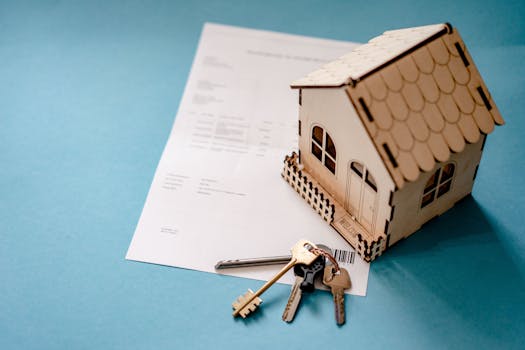 Photo: Atlantic Ambience / Pexels
 Photo: Monstera Production / Pexels
 Photo: Atlantic Ambience / Pexels